Books & Editions
Book Condition Terms for Illustrated Nautical Books
A field guide to the faults and strengths that descriptions often compress into a few words.
At a glance
This is a source-led reading note. It draws its route from ABAA glossary, ILAB ABC and Methodology and keeps the limits of each source visible.
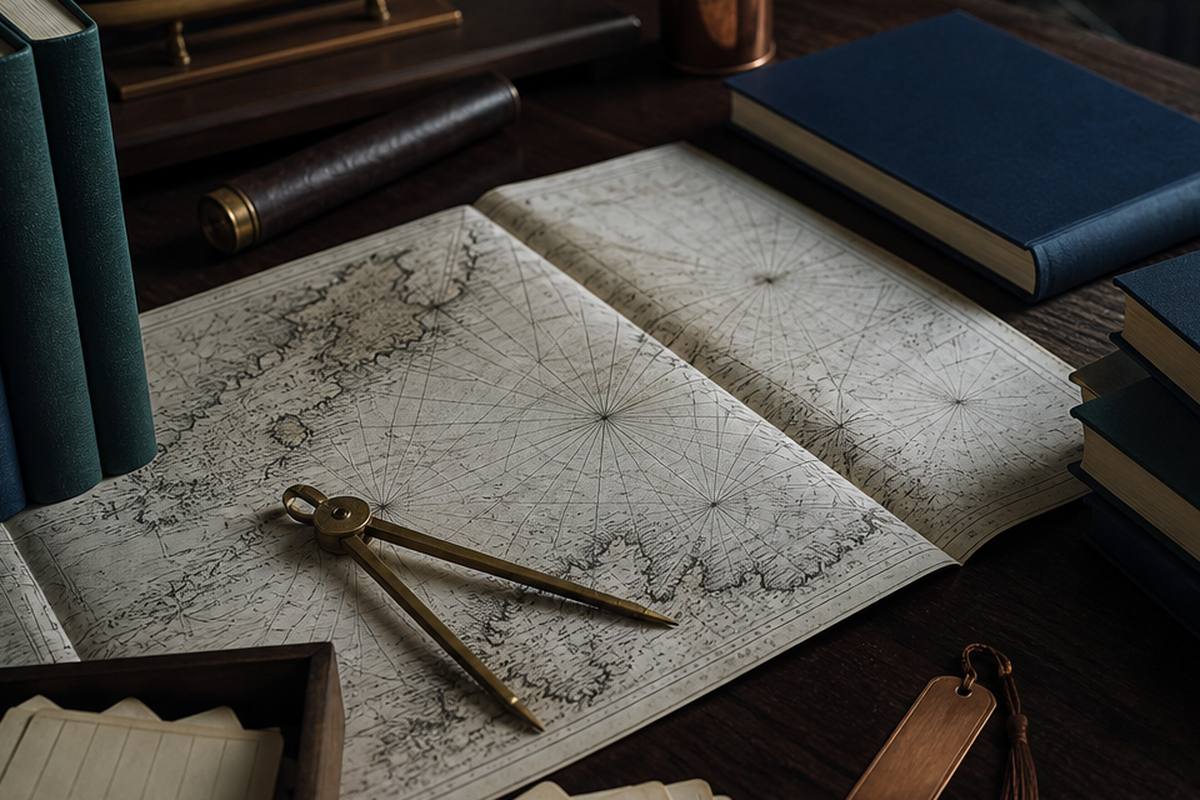
Condition language is a shorthand for a physical conversation. In maritime books, illustrations, folding plans, maps and engraved plates deserve their own line of inspection. A sound binding does not compensate for a missing chart, and a neat description should never conceal an unexamined question.
Three soundings before you begin
- Ask whether all maps, plates and appendices are present.
- Distinguish a stable repair from a loose or actively damaged binding.
- Read dust-jacket, board and text-block notes as separate observations.
Make the next step small
Write down the precise question you want a book or record to answer. Then choose one catalogue or guide, capture its stable reference, and return to the page with the evidence in view. That sequence is slower than a quick list, but it leaves a reader with a useful trail.
Source-aware practice
A published book, a library catalogue and an archive guide belong on the same shelf only after their purposes are named. The Quarterdeck Index labels those differences so that a reader can move between them without confusing recommendation, record and primary evidence.
Browse the Quarterdeck Index