
Lead feature
Build an Age of Sail library that reads across history and record
A starter shelf becomes more useful when each title has a clear task: overview, ship, person, primary source, collecting reference or companion.
Read the library routeNautical books, reading routes and records from the Age of Sail
Nautical literature and archival reading
Reading routes for nautical books, Patrick O'Brian, Age-of-Sail history and the records that hold a story steady.
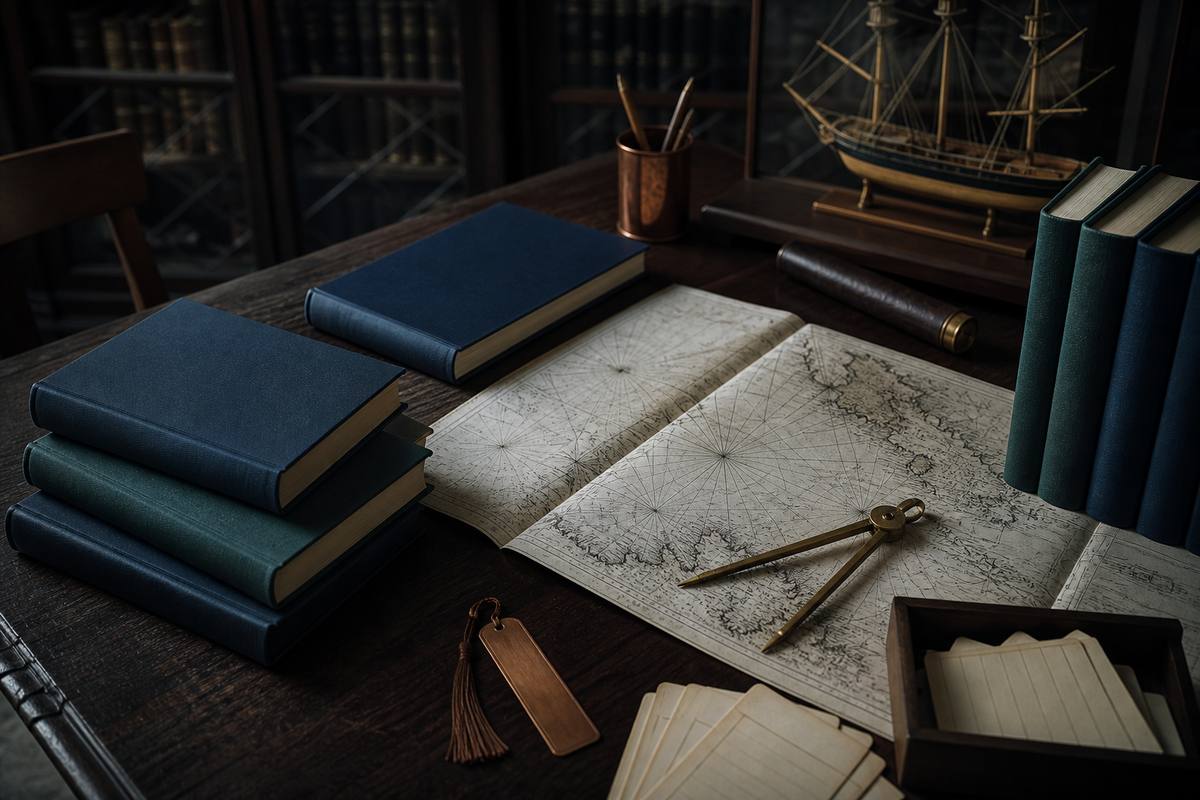
 Books & EditionsLearn to inspect editions, condition and provenance.
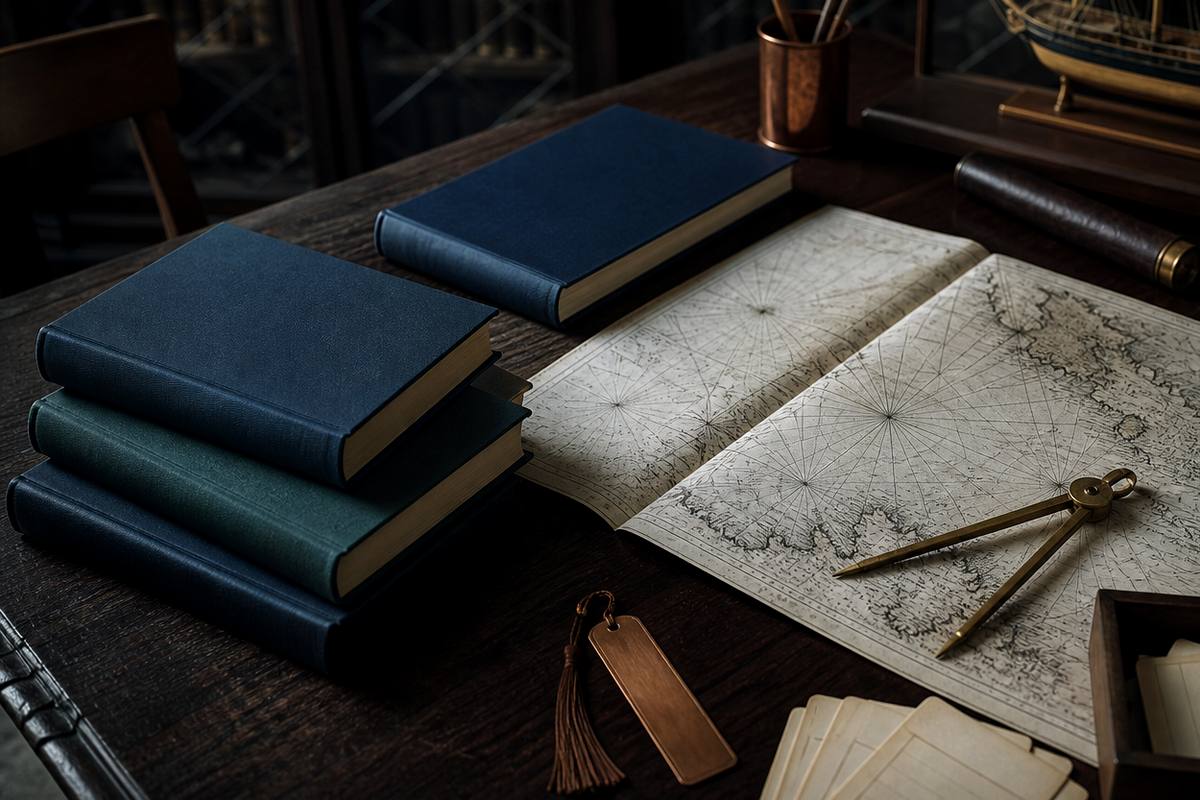 Reading O'BrianCompanions, sequence and historical context without hurry.
 Age of SailBooks, ships, people and the documents behind them.
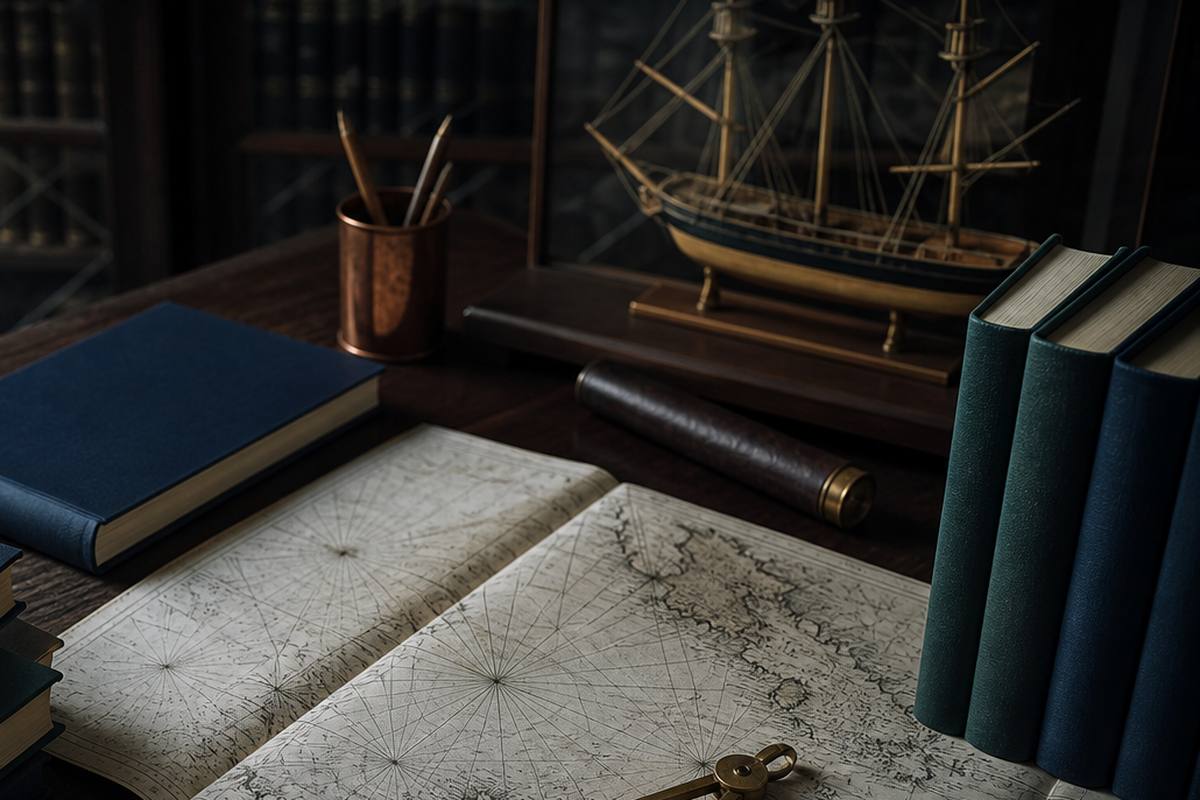 Research DeskFind the record class before entering the catalogue.
 The LogbookDated notes from the desk and the reference shelf.
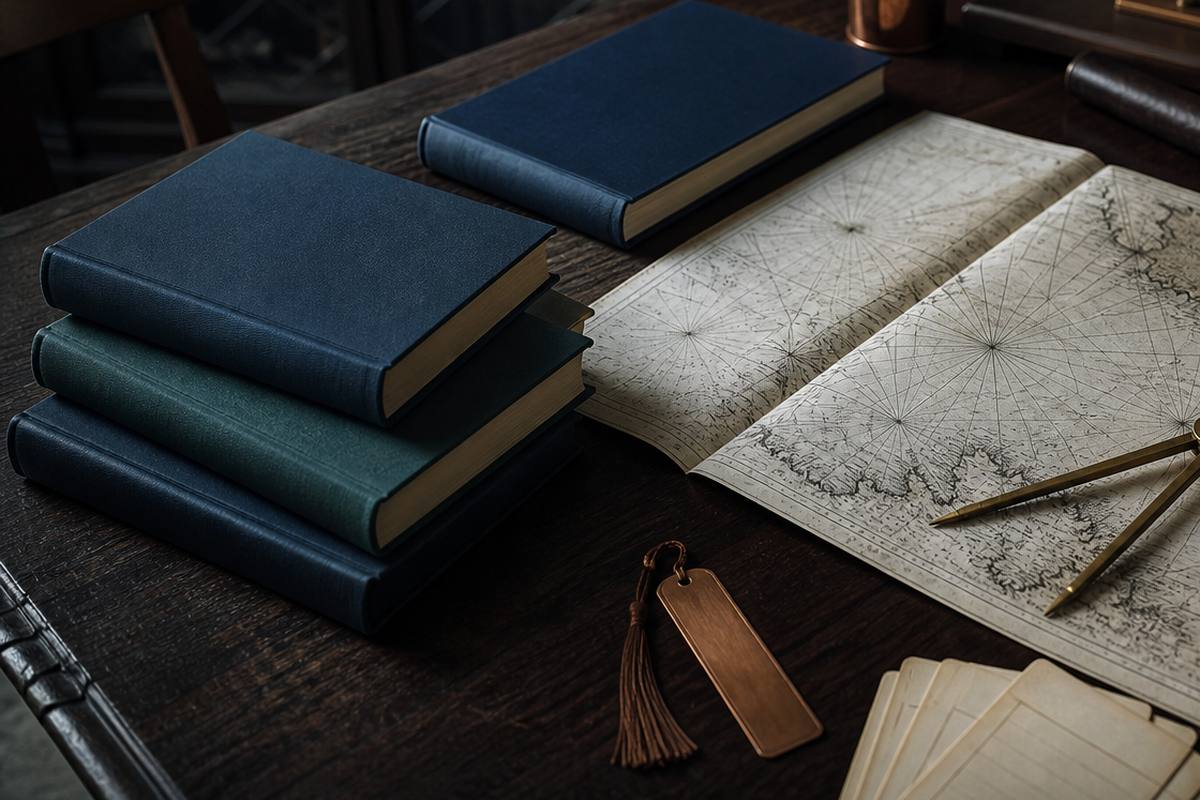 Quarterdeck IndexA compact index of books and research gateways.
Lead feature
A starter shelf becomes more useful when each title has a clear task: overview, ship, person, primary source, collecting reference or companion.
Read the library routeDated logbook
A small shelf built for repeated questions.
Three different things, three different next steps.
Maps, plates and bindings deserve separate attention.
Choose the record type that fits the question.
Reference works can reveal more than a reader wants.
A number line is a clue, not a universal verdict.
Begin with the object and its institutional record.
Names, dates and ships should remain distinct until the record joins them.
A source-led route through editions, condition and provenance.
A short route through Dutch antiquarian listings, the condition terms a buyer meets first, and a safe way to buy at a distance.
How the scientific volumes of a surveying voyage were made, and what a reader can still check in their plates and locality lines.
What a ship's library had to do with a fixed shelf and a few readers, and how a small congregation plans its own reading.
Believer's baptism by immersion, the shape of an ordinary Baptist Sunday service, and how American Baptists differ from Southern Baptists.
How the Be On Our Side transit poster campaign began, where it ran in American systems, and the counter-advertising that answered the 2011 subway posters.
What an art dealer does day to day, how a gallery exhibition is mounted, and how to read a wall label in a contemporary gallery, explained plainly.
What Día is, who began El día de los niños / El día de los libros in 1997, and how Children's Day is kept in Mexico on 30 April.
Field notes on telling grey kangaroos from wallabies, reading wombat burrows and koala scratches, and naming the calls of kookaburras, rosellas and black
Kobe Mosque opened in 1935, funded by Indian Muslim traders and designed by Czech architect Jan Josef Švagr. Its war years and survival examined.
How adults choose a dance, theatre, art or language class at a municipal cultural centre, what paperwork follows, and how a season is programmed.
How a local radio cluster divides its airtime and engineering work, from FM multiplexing and AM propagation to microphone technique and loudness.
How American film noir formed in the 1940s, how chiaroscuro and the fatal woman shaped it, and what neo-noir made of that inheritance.
A short-form collection on the American Civil War: poems grouped by battlefield, camp life and mourning, plus the counting and season word of haiku.
A reading-room guide to European sword typology, the making of iron and steel before industry, and the conservation of blades in public collections.
David Beghè, the Pinacoteca Beghè at Castello Doria Malaspina, and a method for reading nineteenth-century frescoes in Liguria.
A reading-room note on indoor and outdoor games, age-banded activities from one to ten, and a rainy-day kit built from what is already at home.
A reading-room guide to aperitivo hour, how a Negroni is balanced, and how Italian bars run from the counter to the till, with notes on ice, soda and vermouth.
How theatre programmes, session sheets and record storage keep the working papers of a traditional pop act in order, from tour to shelf.
A practical guide to Santa Fe stays: where to sleep, how to reach the city from Albuquerque, and which dates fill the calendar through the year.
From the Quarterdeck Index
The index uses reader goals and source types so a naval history does not masquerade as a record series, or a catalogue as a fully digitised archive.
Browse all 36 launch recordsRead how the desk selects sources, treats uncertainty and restores historically cited paths.
The reference shelf
Each route below is revisited on the maintenance cycle, with sources, access notes and edition language checked against the catalogues and guides behind them, so the page stays sound long after its first publication.
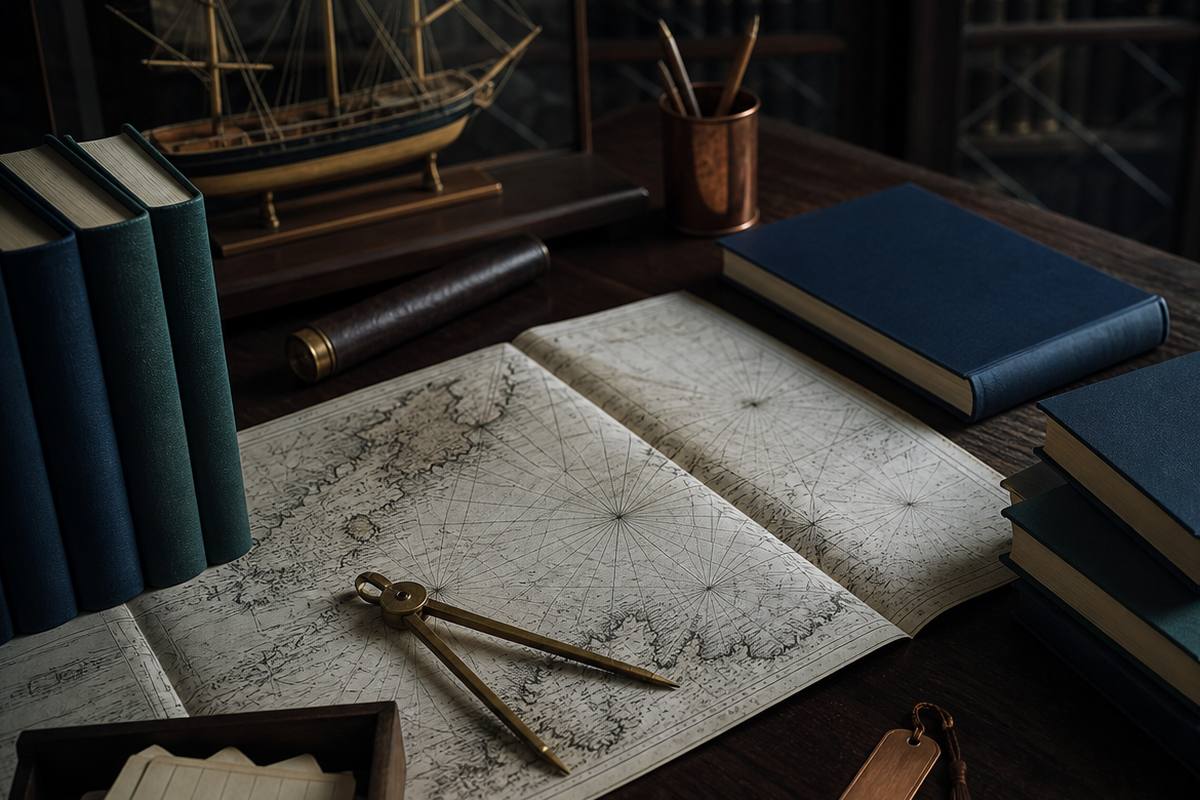
Publisher habits, number lines and title-page dates read as clues, then weighed against a catalogue record.
Read routeA standing map of which record class proves what, from a log's noon positions to a muster's names.
Read routeThe desk's three-stage route from a bare name to service, ship and context records.
Read routeThirty-six records pairing each title or gateway with its source line and reader goal.
Read routeA note on the reference works that earn repeated visits, and why that shelf changes slowly.
Read route
How an ownership mark becomes a documented trail instead of an attractive story.
Read routeA few pages from beyond this library that the desk has found worth a return visit.